
In the 1930s, Cleveland dentist Weston Price traveled the world with a camera and notebook to document the teeth and jaws of indigenous populations. Research was his thing, after all — so much so that he had served as the first research director for the group that grew into the American Dental Association.
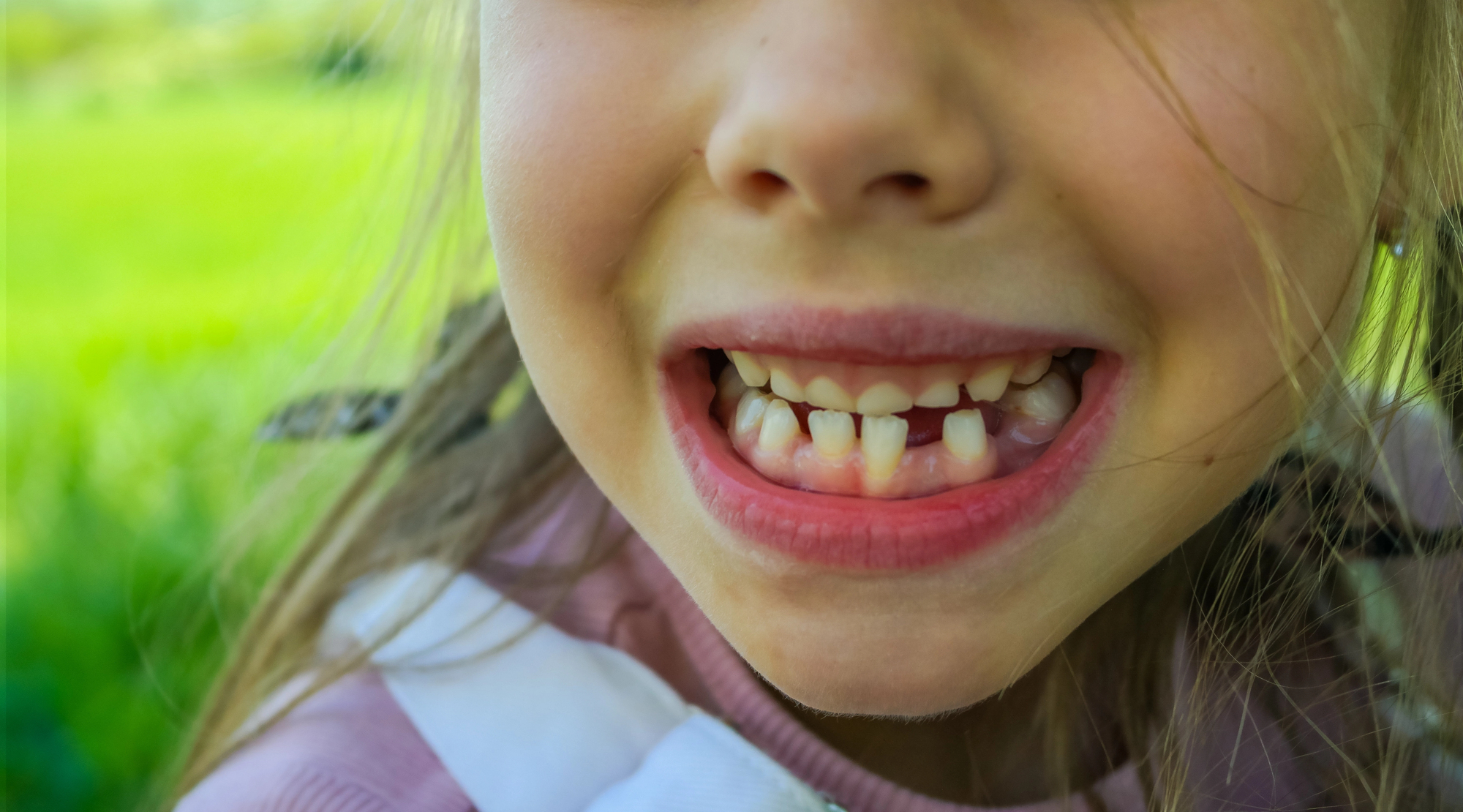
Consistently, Price found that those who still followed the foodways of their ancestors typically had wide jaws, broader and more developed dental arches, and straight teeth. He also found that after adopting refined Western foods, their offspring had considerably narrower arches and jaws that had failed to grow forward, Their teeth came in crowded or crooked. Their wisdom teeth were often impacted.
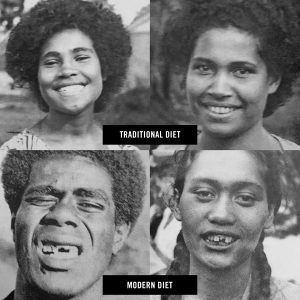 Price shared his findings in Nutrition and Physical Degeneration — a book that did much to inform biological dentistry as we know it today.What’s more, some aspects of Price’s work are being explored through modern craniofacial and airway research. For instance, a 2024 pilot study reported that children who ate more foods that required actual chewing tended to have broader dental arches than those raised on softer foods.
This happens because the jaw grows in response to the work it does. Chewing firm food sends a signal to the bone to grow outward. Without that sign, the jaw doesn’t get the message. And once growth stops, expansion becomes much more difficult and often requires different approaches.
But in childhood, there’s still an opportunity to stimulate and guide growth, thanks to the structure of the upper jaw, or maxilla. It’s actually made up of two bones that are joined at the center by a structure called the midpalatal suture. In children, the suture is soft and responsive. By the teen years, though, it starts to fuse. Now, the same gentle, gradual pressure that produces natural arch expansion in a 6-year-old would accomplish almost nothing in a 25-year-old.
You might be wondering, “But what about the lower jaw?” In fact, the mandible doesn’t usually need much encouragement to grow. What’s more common is that it gets held back by a narrow upper arch. The jaws grow in relation to each other. If the upper jaw doesn’t allow enough room for the lower to rest where it naturally wants to, the lower may remain pushed back or kept from spreading to full width.
So when we need to create more expansion in the upper arch, it’s less about forcing something totally new and more about just getting out of the way. The maxilla is free to finally move forward and outward, widening into a more naturally comfortable position.
Getting this expansion — whether naturally or with orthopedic dental appliances – matters for far more than just the teeth. A narrow arch also means there may not be enough room for the tongue to rest where it belongs: up against the palate, where its presence helps the arch continue to grow.
This state of affairs can have real consequences for breathing, too. That’s because the roof of your mouth is the floor of your nasal cavity. A narrow, high-vaulted palate means a smaller nasal airway. A smaller airway means less room to breathe, which is one reason why mouth breathing is so common among those with narrow dental arches. Mouth breathing, in turn, can further affect the shape of the face and jaws over time.
This cluster of issues has been linked with fragmented sleep and reduced oxygen at night, both of which can have real impacts on attention, behavior, growth, and development.
But assisted expansion can help. According to a 2025 randomized controlled trial in Pediatric Pulmonology, for instance, widening the palate measurably improved both sleep and breathing in children aged 6 to 8 with sleep disordered breathing. That finding came on the heels of a 2024 systematic review, which highlighted two realities: 1) a constricted upper jaw consistently shows up with less airway volume and increased resistance to airflow; and 2) widening the arch corrects that directly and breathing improves.
Expanding the arch is thus about more than just making room for teeth. We’re raising the floor of the nasal cavity. We’re giving the tongue room to rest as it should. We’re opening up the airway. The idea is to give the whole system the opportunity to do what it was designed to do.
Again, though, the window for expansion doesn’t stay open forever. That’s why it’s important to spot any issues as early as possible. All the tools we have for stimulating and guiding growth just won’t work as well, if at all, later on.
 There are many types of expansion appliances available, both removable and fixed. Which one to use depends entirely on the child — their age, their specific arch development, and the current state of their bite and airway. All work on the same principle, though: gentle, consistent pressure applied while the midpalatal suture is still responsive.
And while these appliances work well on their own, they tend to work best when the body is already moving in that direction. This is where diet becomes far more than just a backdrop for change.
Recall the first study we mentioned and what it showed with respect to chewing. A child who regularly chews firm, whole foods — raw vegetables, dense fruit, meat that requires tearing — is regularly signaling the jaw to keep growing outward. That stimulus supports bone growth, muscle development, and the kind of natural expansion that used to happen all on its own.
An appliance can guide and accelerate the process. What the child eats every day helps sustain it.
In every case, the goal isn’t to intervene for its own sake. It’s to give the jaw – and the airway and face and the whole orofacial system — the best possible chance to develop into what it was always capable of becoming.
That requires looking at the whole picture: how the child breathes, how they sleep, what they eat, and how all these together are quietly but significantly shaping the structure they’ll live with for the rest of their life.
